Most conversations about electrical safety start with the worker, but NFPA 70E likes to start somewhere else. Before it says anything about what an electrician should wear, it says what the employer must build.
Article 105 puts the responsibility in two plain lines. The employer must establish, document, and implement the safety-related work practices the standard requires. Then the employer must train employees in those practices. Only after that does the standard turn to the employee, whose job is to follow the practices the employer provides.
That order matters. If your organization has people working on or near electrical equipment, NFPA 70E is not a guideline for your electricians to look up. It is a framework your company is expected to own.
Where OSHA fits
One of the most common questions we hear is whether NFPA 70E is "the law." The honest answer takes a little more than a yes or no.
OSHA writes and enforces its own electrical safety standards. It does not enforce NFPA 70E directly. But OSHA views NFPA 70E as the primary consensus standard for electrical hazards in the workplace, and it may use NFPA 70E to support citations for violations of its own rules. Some federal programs go further: the Department of Energy's worker safety and health program (10 CFR 851) requires compliance with NFPA 70E outright.
In practice, that means NFPA 70E is the yardstick. When an inspector, an insurer, or an investigator asks whether your company did what a reasonable employer should have done, NFPA 70E is very likely the measure they will use.
The electrical safety program
The heart of an employer's responsibility is the electrical safety program described in section 110.3. The standard calls for an overall, documented program that directs activity appropriate to the risk of the electrical hazards involved.
- A compliant program is more than a binder on a shelf. NFPA 70E says it must:
- Include inspections to verify that installations conform to codes and standards
- Consider the condition of maintenance of electrical equipment and systems
- Consider how to promote hazard awareness and self-discipline among workers
- Identify the principles it is built on, the controls used to measure and monitor it, and the procedures workers follow before starting work near an electrical hazard
The program must also contain specific procedures. Those include a risk assessment procedure that identifies hazards, assesses risk, and applies risk controls using the hierarchy of controls. That procedure is required to account for human error, which is a frank admission that even well-trained people make mistakes and the system has to plan for it.
Keep reading
Enter your email to read the rest of this article. One signup unlocks every article on the site.
The program also needs documented job safety planning and job briefings completed by a qualified person. It needs a procedure for investigating incidents, and the standard is clear that this includes close calls and near misses, not only injuries and fatalities. A near miss is the cheapest lesson your company will ever get, and the standard expects you to learn from it.
Lockout/tagout is part of the program
Article 120 requires every employer to establish, document, and implement a lockout/tagout program. The procedures must be developed from the actual equipment and systems at your facility, using up-to-date drawings and diagrams.
The details are specific. Locks and tags must be unique, readily identifiable, and used for no other purpose. Each lockout device must identify the person who installed it. Control devices like push-buttons and selector switches may not be used as the primary isolating device. Everyone who could be exposed, directly or indirectly, must be involved in the procedure.
These are not suggestions for a toolbox talk. They are program requirements, and the employer is the one who must put them in writing.
Audits on a fixed schedule
A program that is never checked tends to drift. NFPA 70E closes that gap with required audits:
What is audited:
- Electrical safety program (when: at least every 3 years)
- Field work (when: at least every year)
- Lockout/tagout program and procedures (when: at least every year)
The field work audit is the one many companies overlook. It is not enough for the program to be correct on paper. The standard expects someone to go out and verify that crews are actually doing what the program says.
Training is a requirement, not a benefit
Section 110.4 requires training for any employee exposed to an electrical hazard when the risk is not already reduced to a safe level by the installation itself. Workers must be trained to understand the specific hazards of electrical energy, the safe work practices for their own tasks, and the link between electrical hazards and possible injury.
The employer also carries the paperwork. Required emergency response training, including safe contact release, must be verified annually and documented. Retraining must happen at intervals of no more than three years, and sooner when workers fall short or their work changes. The employer must also verify, through regular supervision or an annual audit, that each employee is following the required work practices.
If an incident ever happens, "we told them" is not a defense. "Here is the training record, here is the audit, and here is the job briefing" is far closer to one.
Contractors don't take the responsibility off your plate
Many facilities rely on outside contractors for electrical work. NFPA 70E addresses this directly in section 110.5, and it assigns duties to both sides.
The host employer must tell the contract employer about known hazards and about the condition of the facility's equipment and installations. The host must also report contractor-related safety violations to the contract employer.
The contract employer must make sure its workers are instructed in those hazards. It must follow NFPA 70E and the host's own safety rules, and it must alert the host to any unique or unexpected hazards found on the job.
In other words, bringing in a contractor shares the work. It does not hand off the responsibility.
Maintenance is a safety issue
Chapter 2 of NFPA 70E connects equipment maintenance directly to worker safety. Equipment must be maintained according to manufacturers' instructions or industry consensus standards to reduce the risk of failure. Overcurrent protective devices must be maintained the same way, and that maintenance, testing, and inspection must be documented.
Where a single-line diagram exists, it must be kept legible and current. That diagram is not just an engineering document. It is the starting point for every lockout/tagout procedure and every arc flash analysis.
That connection runs both ways. An incident energy analysis must consider how well the overcurrent protective devices have been maintained, because a poorly maintained breaker may clear a fault slowly, and a slower clearing time can mean more energy released in an arc flash. The analysis must be updated whenever the electrical system changes in a way that could affect results, and reviewed at least every five years.
Skipping maintenance doesn't just risk downtime. It can quietly make the arc flash labels on your equipment wrong.
What this means for your company
Add it all up and the picture is clear. NFPA 70E expects employers to have:
- A documented electrical safety program, audited at least every three years
- A documented lockout/tagout program built on current drawings, audited at least yearly
- Risk assessment, job planning, and incident investigation procedures
- Training for qualified and unqualified workers, with retraining at least every three years
- Annual verification and documentation of emergency response training
- Field audits confirming the program is followed
- Clear communication with contractors in both directions
- Documented maintenance and an incident energy analysis reviewed at least every five years
That is a lot to manage. But every item on that list exists for the same reason: to make sure the people doing the work go home the same way they came in.
How AMP can help
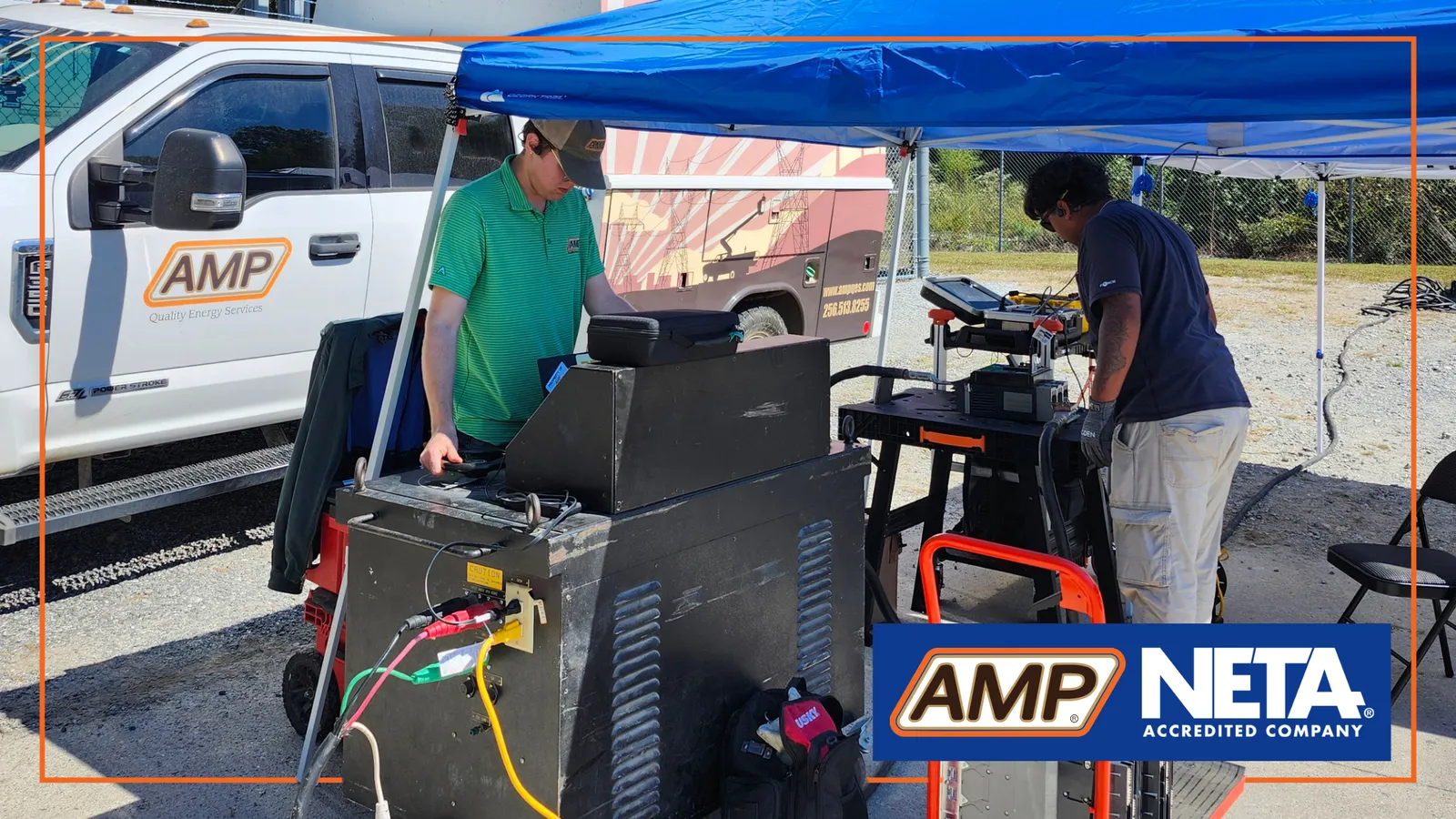
Our NFPA 70E (2024) training walks your team through the standard chapter by chapter, from Article 100 definitions to safety-related maintenance and special equipment. It is taught by a NETA-certified company that does electrical testing and maintenance in the field every day, so the material is grounded in real equipment and real job sites.
Whether you are building an electrical safety program from scratch or making sure your current one holds up, training is the place to start.
Contact AMP Quality Energy Services at ampqes.com or (256) 513-8255 to schedule NFPA 70E training for your team.