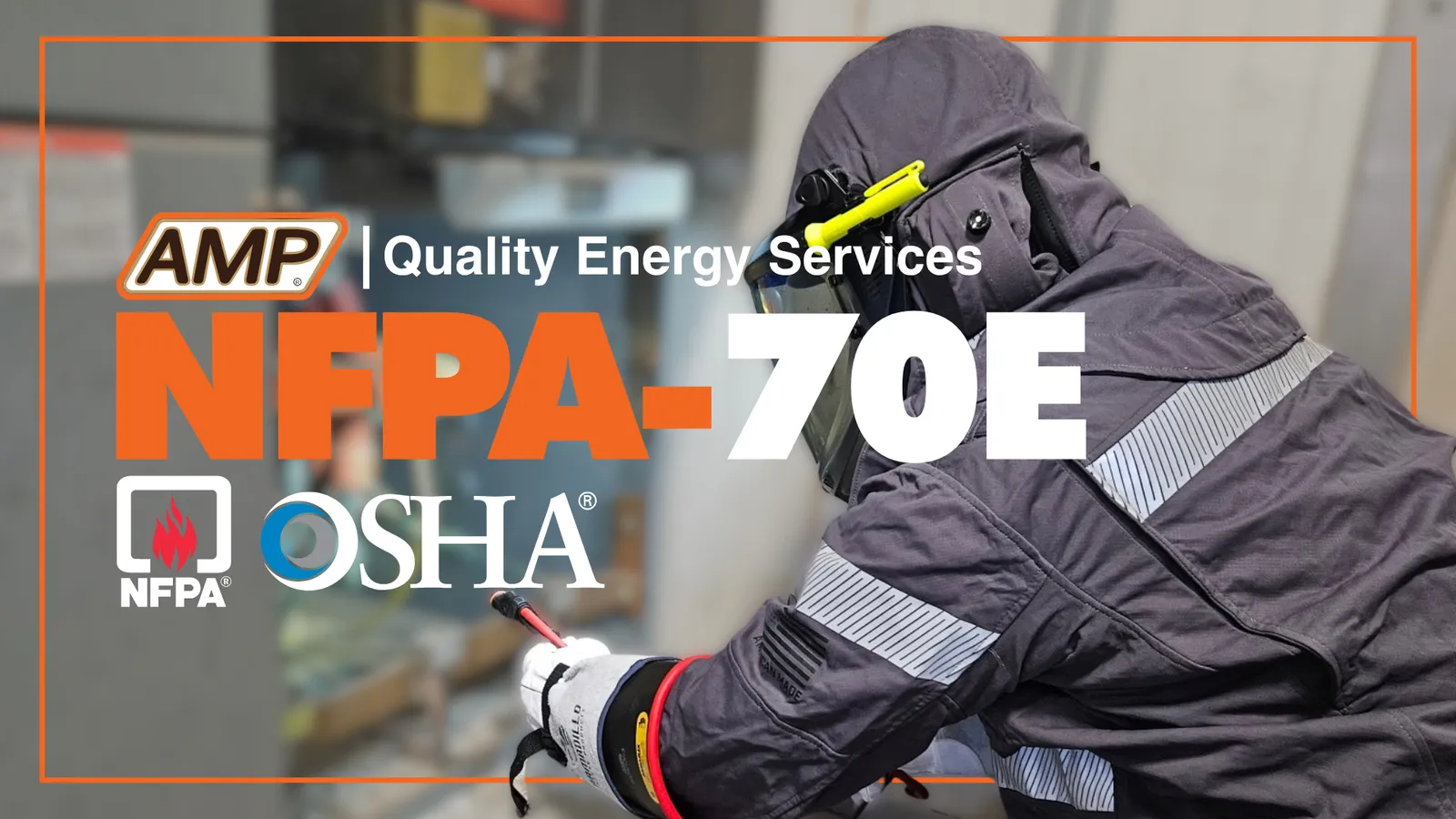
PPE matters, and the standard spends a great deal of time on it. But NFPA 70E is built around a simple idea that is easy to lose sight of on a busy job: the safest way to deal with an electrical hazard is to make sure it isn't there in the first place.
The hierarchy of risk controls
NFPA 70E requires employers to use a hierarchy of risk control methods when they assess and manage electrical risk. The order is deliberate. Methods at the top remove or reduce the hazard itself. Methods at the bottom depend on people doing everything right, every time.
- Elimination: remove the hazard entirely, most often by de-energizing
- Substitution: replace the hazard with something less dangerous
- Engineering controls: isolate people from the hazard through design
- Awareness: signs, labels, and barriers that warn people of the hazard
- Administrative controls: procedures, permits, training, and job planning
- Personal protective equipment: protection worn by the worker
And after the fact, if something still goes wrong, the standard points to mitigation: reducing the harm once an incident has happened.
Notice where PPE sits. It is not the foundation of the plan. It is what protects a worker when the hazard is still there, and it only works if it is the right gear, rated for the hazard, in good condition, and worn correctly. Every step higher on the list removes some of that dependence.
Elimination comes first
NFPA 70E doesn't leave the top of the hierarchy as a suggestion. Section 110.2 requires employers to establish, document, and implement an electrically safe work condition, with hazard elimination as the first priority. This applies when any of the following is true:
- The equipment operates at 50 volts or more
- The employee is within the limited approach boundary
- The employee interacts with equipment where conductors are not exposed, but there is an increased likelihood of injury from an arc flash
An electrically safe work condition is not just "the breaker is off." Article 120 lays out an eight-step process: identify every possible source of supply using current drawings, interrupt the load and open the disconnects, visually verify that the blades are open, release stored electrical energy, block stored mechanical energy, apply lockout/tagout devices, test for absence of voltage, and apply grounding where induced voltage or stored energy is possible.
Only when that process is complete is the hazard truly eliminated. Until then, the equipment must be treated as energized.
When energized work is actually justified
NFPA 70E does recognize that not every task can be done de-energized. But it limits energized work to a short list of exceptions:
Keep reading
Enter your email to read the rest of this article. One signup unlocks every article on the site.
- A normal operating condition exists
- An energized disconnect is being operated in order to create an electrically safe work condition
- The task is infeasible in a de-energized state
- De-energizing would introduce additional hazards or increased risk
- The voltage is under 50 volts and there is no increased exposure to electrical burns or arc explosion
The word "infeasible" is doing a lot of work there. Shutting down a process may be inconvenient, expensive, or unpopular. None of those make it infeasible. Testing and troubleshooting a circuit that has to be live to diagnose is a different matter.
What "normal operation" really means
One exception covers the routine interaction people have with electrical equipment every day: flipping a switch, operating a breaker, starting a motor. NFPA 70E calls this a normal operating condition. But it only applies when all of the following are true:
- The equipment is properly installed
- The equipment is properly maintained
- The equipment is rated for the available fault current
- The equipment is used according to the manufacturer's instructions
- The doors are closed and secured
- All covers are in place and secured
- There is no evidence of impending failure
This checklist quietly connects day-to-day safety to everything else. A breaker cabinet with a missing cover isn't in a normal operating condition. Neither is equipment that hasn't been maintained, or a panel that hums, smells hot, or shows scorch marks. When there is evidence that equipment could fail, the standard requires it to be de-energized unless that would create greater risk, and requires barricades and alerting techniques to protect people until it is.
Administrative controls: plan, permit, brief
When energized work is justified, the standard doesn't simply hand the worker a suit and step back. It adds layers of planning and approval.
An energized electrical work permit is required when work is performed within the restricted approach boundary, or when there's an increased likelihood of arc flash injury while interacting with equipment. The permit documents the justification for working energized, the hazards, the safe work practices and PPE, how unqualified people will be kept away, evidence that a job briefing took place, and the signatures of the people who approved the work.
Some tasks are exempt from the permit when a qualified person uses the right practices and PPE, such as testing, troubleshooting, voltage measuring, thermography, and visual inspections that don't cross the restricted approach boundary. Exempt from paperwork does not mean exempt from planning.
Behind every task is a risk assessment. NFPA 70E requires both an electric shock risk assessment and an arc flash risk assessment. These estimate how likely an incident is and how severe it could be, then decide whether more protective measures are needed. A common risk matrix scores probability from "improbable" to "frequent" and severity from "negligible" to "catastrophic," then multiplies them to rank the risk. The question is never just "what PPE do I need?" It is "what could happen here, how bad could it be, and what is the best way to control it?"
Then, and only then, PPE
When the hazard can't be eliminated and other controls have been applied, PPE does its job. NFPA 70E allows two methods for selecting arc flash PPE: an incident energy analysis, or the arc flash PPE category method. Either one is permitted, but not both on the same piece of equipment.
The incident energy analysis has to account for working distance and for how fast the protective device will clear a fault, including its condition of maintenance. It must be updated when the electrical system changes and reviewed at least every five years.
That detail ties the whole hierarchy together. The arc flash rating on a label is only as good as the maintenance behind it. If a breaker clears slowly because it hasn't been serviced, the actual energy in an arc flash can be higher than the label says, and the PPE chosen from that label may not be enough. Good PPE depends on good engineering and good maintenance upstream.
Habits that put the hierarchy into practice
The hierarchy of controls can sound abstract, but it shows up in a handful of concrete habits:
- Ask whether it can be shut down before asking what PPE the job needs
- Use current single-line diagrams to find every source, not just the obvious one
- Test before you touch, every time, with a properly rated meter
- Live-dead-live: verify the meter on a known source before and after testing
- Treat missing covers, open doors, and signs of failure as warnings, not inconveniences
- Brief the job before it starts, including what changes if the scope changes
- Report near misses so the next crew doesn't learn the same lesson the hard way
None of these require special equipment. They require training, and a culture where taking the extra step is expected.
Training that teaches the whole picture
Our NFPA 70E training teaches the hierarchy of controls the way the standard intends it: elimination first, PPE last. Your team will learn how to establish an electrically safe work condition, when energized work is and isn't justified, how to perform shock and arc flash risk assessments, how permits and job briefings work, and how to select and use PPE when it is truly needed.
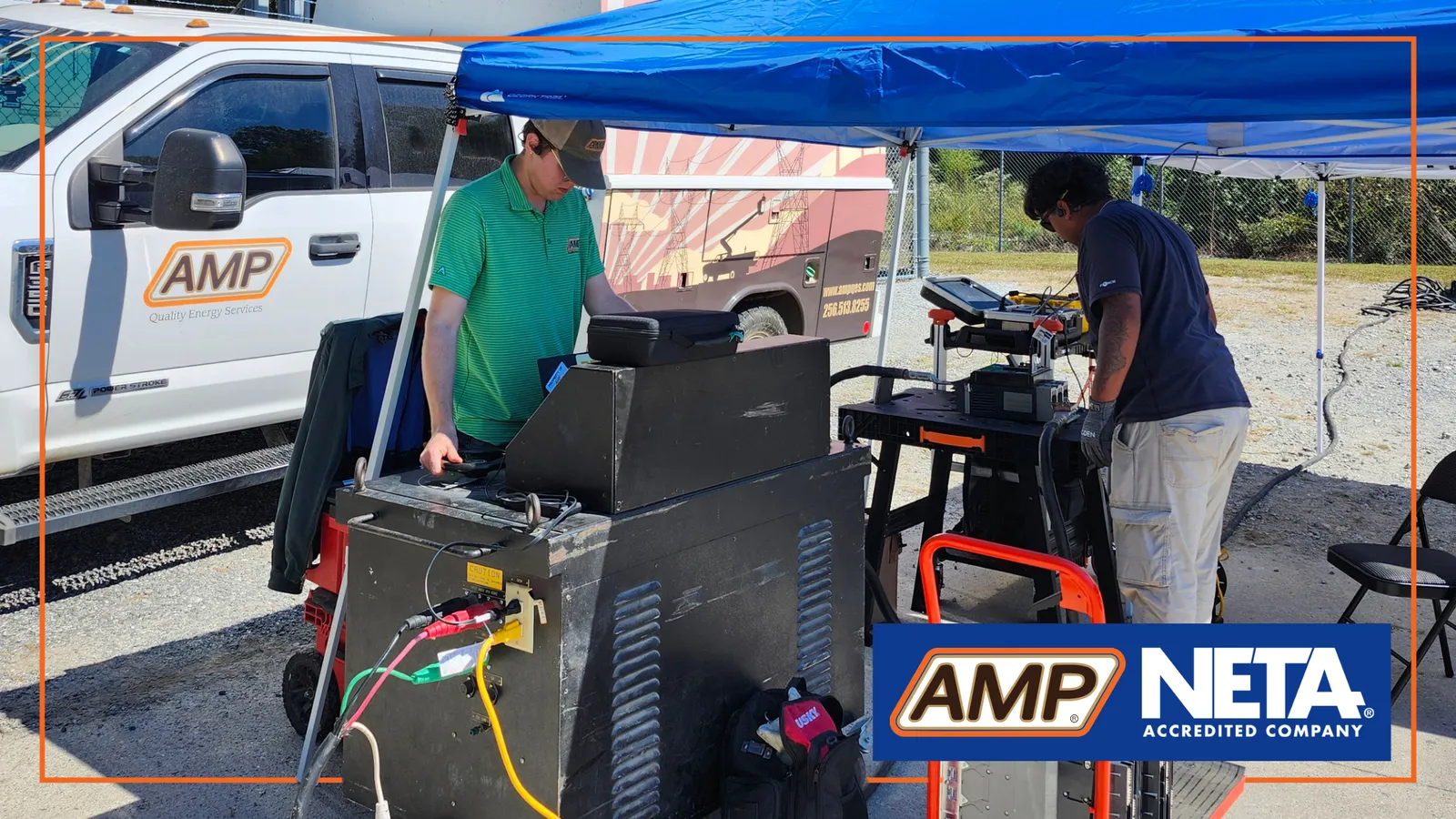
It's taught by a NETA-certified company that tests and maintains electrical systems in the field, so the lessons come straight from real equipment and real job sites.
The best PPE is the PPE you never have to rely on. Invest in training.
Contact AMP Quality Energy Services at ampqes.com or (256) 513-8255 to schedule NFPA 70E training for your team.
If you're in need of PPE, visit our friends at armadillosafe.com for more info!